About the AKU
Aurelius‑Konservatorium
für Unternehmenskunst
The Aurelius-Konservatorium für Unternehmenskunst e.V. (AKU) was founded in 1987 by art historian Prof. Dr. Heinrich Aurelius-Brendt in Frankfurt am Main and relocated to Berlin in 1994. As the only institution of its kind, we are dedicated exclusively to the preservation, research, and mediation of corporate cultural heritage — those artifacts that arise when corporations assume the role of patrons, benefactors, and ultimately cultural institutions.
Our collection encompasses over 847 works: from corporate portraits and founder statues to IPO documentation and digital ephemera. We believe that the aesthetic products of capitalism — the logos, the monuments, the self-representations of corporate leaders — demand serious art-historical consideration. They are the cathedrals of our time.
The fetishization of the corporate is not a marginal phenomenon. It permeates our visual culture, our political institutions, our self-image. The AKU sees it as its mandate to make these phenomena visible, to preserve them, and to interrogate them — before they are lost in the acceleration of the present. Corporate cultural heritage belongs in public hands.
Preservation
We secure corporate cultural heritage for future generations — physically and digitally, using the same standards as classical art history.
Critique
To preserve is not to glorify. Every work in our collection is shown in the context of its creation and its social impact.
Public Access
Corporate culture shapes everyone. That is why the AKU is accessible to all — through free admission programs, educational initiatives, and digital outreach.
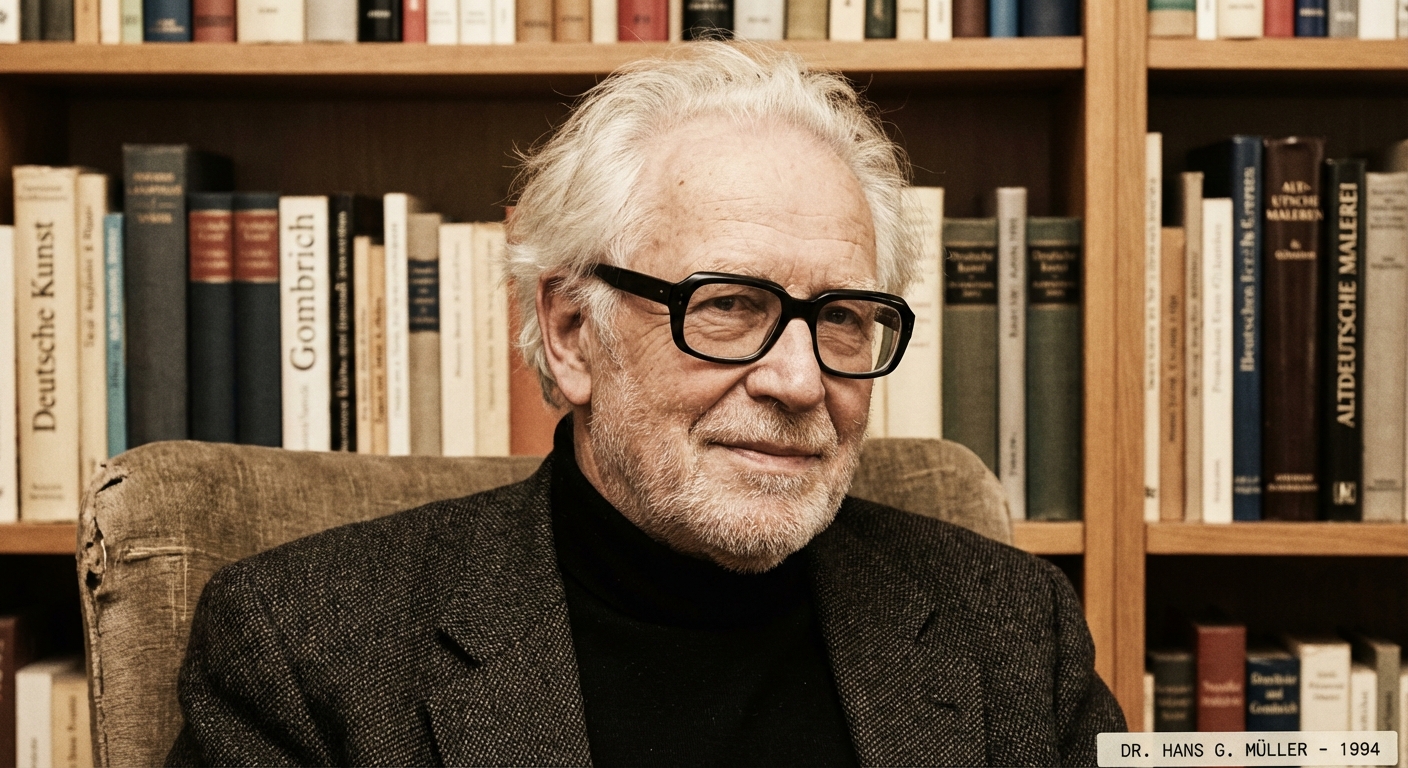
Prof. Dr. Heinrich Aurelius-Brendt
Founder, AKU Berlin
1987 – 2011 (Director)
Born 1941, Heidelberg
Founder
"The company is the cathedral of our time. I mean this without irony and without celebration — only as a diagnosis. When I founded the AKU in 1987, my colleagues thought I was making a joke. I was not making a joke."
"We began with three portraits from the Deutsche Bank collection. By 1994 we had moved to Berlin, and by 2001 we were acquiring IPO documentation and digital ephemera. The collection now exceeds 847 works. I have been wrong about many things. I was not wrong about this."
— Prof. Dr. Heinrich Aurelius-Brendt, in conversation with Monopol Magazine, March 2009
History of the AKU
1987
Founded by art historian Prof. Dr. Heinrich Aurelius-Brendt in Frankfurt am Main. First donation: three corporate portraits from the Deutsche Bank collection.
1994
Relocated to Berlin. Moved into the current building on Kurfürstenstraße 78. Opening of the first permanent exhibition.
2001
Launch of the Annual Survey of Corporate Art exhibition. Expansion of the collection focus to include digital ephemera.
2012
Opening of the museum shop and reading room with a specialist library on corporate history.
2020
Launch of the digital collection database. Beginning of a photography collection documenting technology sector IPOs.
2025
Acquisition of 'Der Gruß' — the most discussed work in the institution's history. Expansion of educational programs for school groups.
From the Director
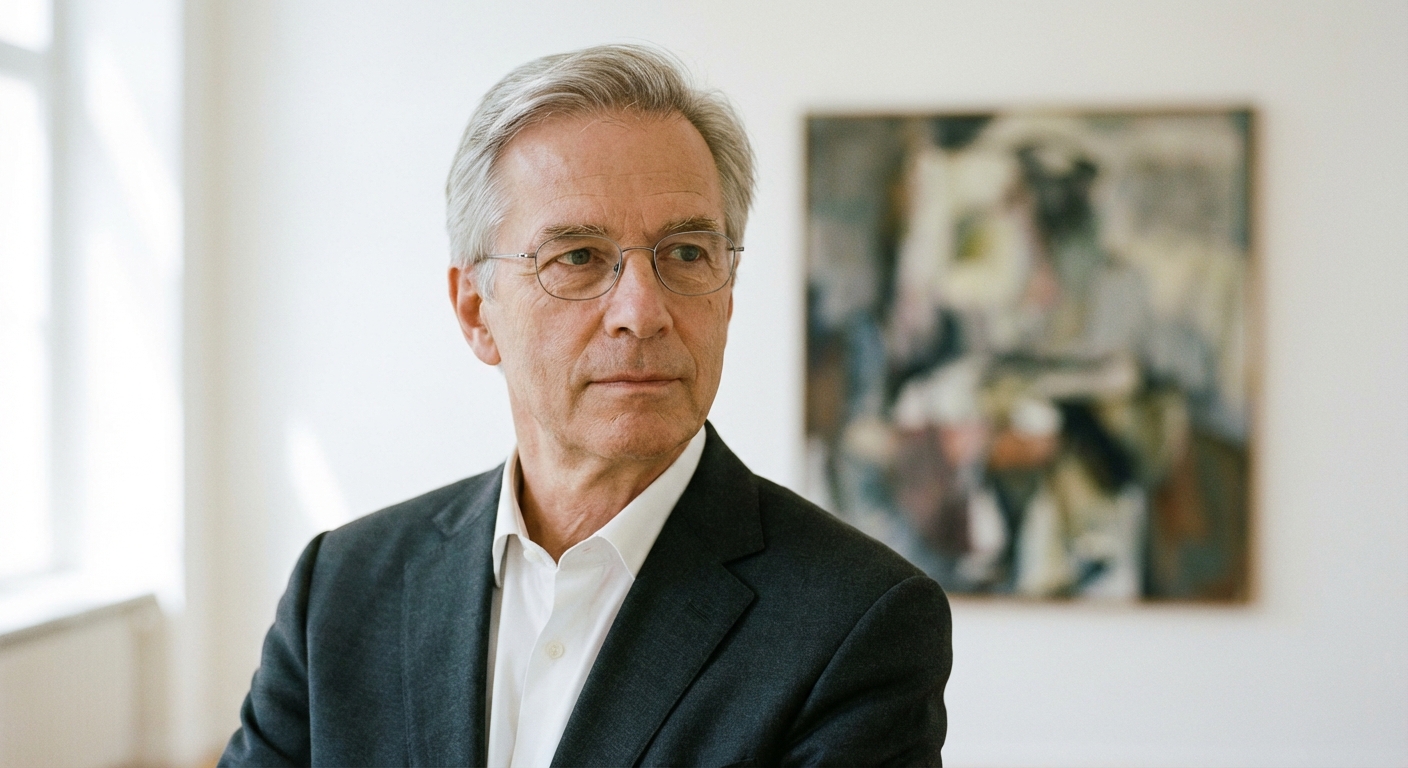
Prof. Klaus-Dieter Brunnhuber
Director, AKU Berlin · Since 2011
“The year 2025 has confirmed what the AKU has maintained since its founding: that corporate culture is not a footnote to art history, but one of its central chapters. The controversies surrounding our new acquisition — ‘Der Gruß’ — have brought this conversation into the mainstream in a way we did not anticipate, and for which we are grateful.”
“We resist the temptation to sanitize or to celebrate. Our task is to preserve, to exhibit, and to think. The works in our collection were created with intentions — promotional, commemorative, self-aggrandizing. Our exhibition practice neither endorses those intentions nor pretends they did not exist.”
“I invite you to visit us in Berlin. Read the wall texts carefully. Disagree with us. That is precisely the point.”
Board of Trustees
Prof. Dr. Hildegard Weißenbach-Kronauer
Chair · Art Historian, Humboldt University Berlin
Dr. Maximilian Trettenbacher
Treasurer · Management Consultant, Ret.
Ingrid Fassbender-Löhr
Curator · Specialist in Digital Ephemera
Prof. Klaus-Dieter Brunnhuber
Director · Art Historian and Curator
Anke Zimmermann-Groll
Communications and Public Affairs
Dr. Ralf Osterkamp
Legal Counsel
Funding & Support
Funded By
Public Funding
Lead Funder
Federal Government Commissioner for Culture and the Media
Institutional Support

Senate Department for Culture and Social Cohesion, Berlin
Project Funding
Kulturstiftung des Bundes
Research Grant

European Cultural Foundation
Foundation Partners
Chan Zuckerberg Initiative
Bezos Earth Fund
Bill & Melinda Gates Foundation
Ford Foundation
Open Society Foundations
Bloomberg Philanthropies
Corporate and foundation support does not influence the AKU’s curatorial decisions, acquisition policy, or critical programming. The institutions listed above are represented in our collection independently of their donor status. We find this simultaneously principled and ironic.
Corporate Partners


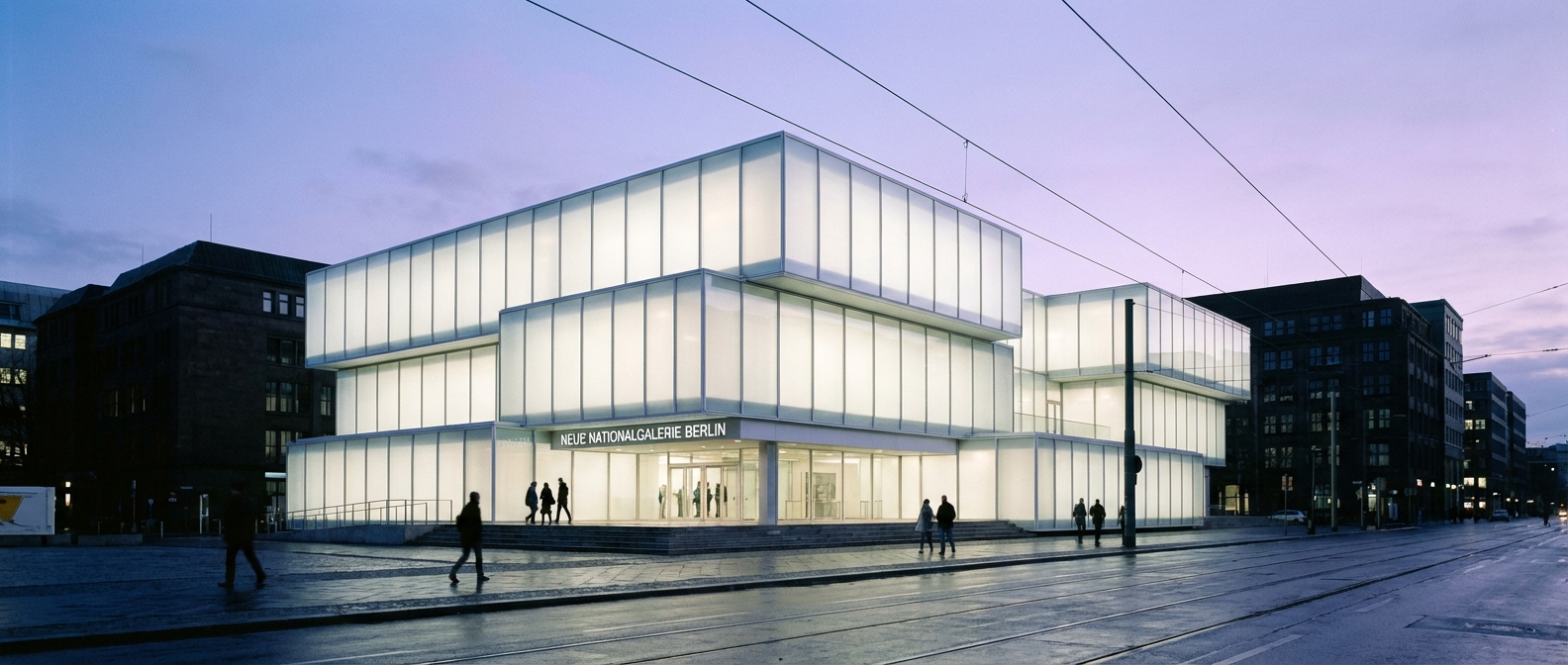
The Building
Kurfürstenstraße 78, Berlin-Tiergarten
The AKU occupies a Berlin postwar building from 1962, repurposed for museum use in 1987. The clear grid facade and high exhibition rooms provide optimal conditions for presenting large-format works.
The building is a listed monument and has been undergoing gradual energy renovation since 2019. The AKU views the preservation of the building as part of its conservatorial mandate.